
Artificial intelligence (AI) has stormed into healthcare, raising curiosity and skepticism. As it infiltrates various medical domains, it has a transformative influence in diagnosing skin and lung cancers and certain heart conditions.
The most recent breakthrough comes from AI’s adeptness in scrutinizing breast screening X-rays or mammograms, unveiling its potential to detect 20% more breast cancers compared to conventional readings by radiologists.
Remarkably, this heightened accuracy doesn’t come at the expense of increased false-positive results. The study also illuminated that AI’s introduction significantly lightens the load of overburdened breast radiologists.
Tag-Team Performance
This groundbreaking development didn’t solely belong to AI’s realm; it’s a product of collaboration. Dr. Kristina Lång, the study author and an associate professor of Diagnostic Radiology at Skåne University Hospital in Malmö, Sweden, emphasizes that the synergy between AI and radiologists yielded these remarkable results.

The pivotal role of radiologists in obtaining mammogram images cannot be undermined. The study’s approach involved two groups of around 80,000 Swedish women. Half had their mammograms read by an AI program before radiologists reviewed them.
The other half underwent the standard procedure, with two radiologists interpreting the mammograms. This methodology, standard in Europe, also points to a shared concern with the U.S. – the shortage of breast radiologists.
Decoding AI’s Breast Cancer Intuition
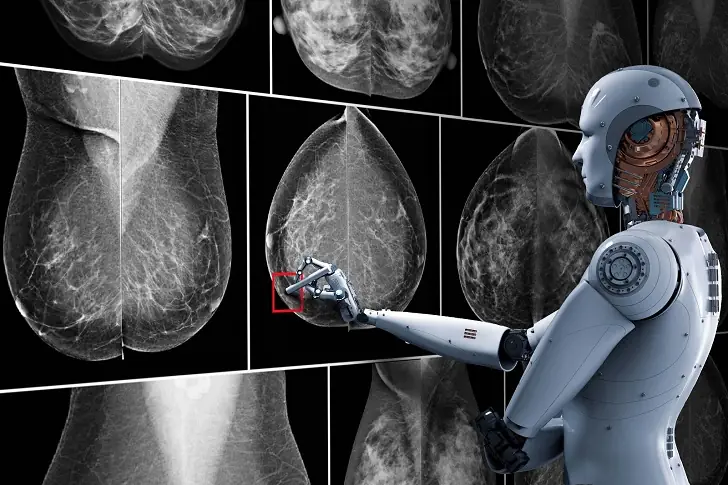
At its core, AI’s prowess in spotting breast cancer lies in its ability to ingest copious amounts of data and process it through an intuitive algorithm. “AI analyzes imaging features in the images that could indicate malignancy,” elaborates Dr. Lång.
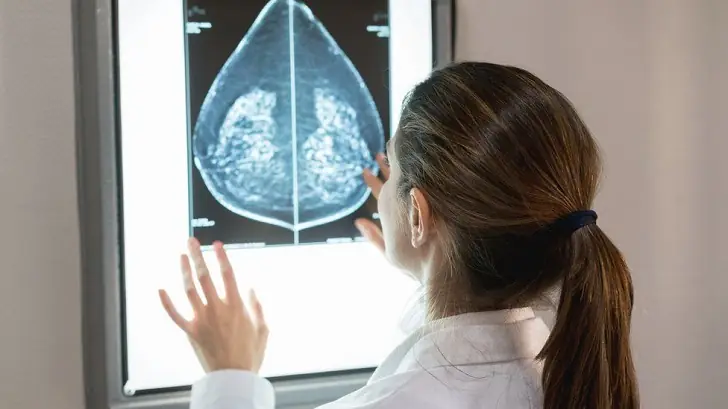
By scrutinizing these images, AI can flag scans are more likely to reveal breast cancer. Moreover, its potential goes beyond mere identification – AI can also pinpoint suspicious findings, assisting radiologists in minimizing overlooked anomalies.
Pros and Cons of AI-Led Detection
While AI’s capabilities dazzle, most women undergoing mammogram screenings are cancer-free. Dr. Lång elaborates, “AI-supported screening led to more detected cancers which were both invasive and in situ.” The term “in situ” indicates non-invasive or pre-invasive breast cancers. However, this increased detection of in situ breast cancer raises the specter of overdiagnosis.
To harness AI’s potential fully, the medical community must delve deeper. “We need to study more in-depth what type of cancers are detected and also what cancers we did not catch in screening,” suggests Dr. Lång.
Human Touch: AI’s Ideal Partner
Dr. Nereo Segnan, Chief of the cancer epidemiology unit at the Center for Epidemiology and Cancer Prevention in Turin, Italy, underlines the importance of human expertise when utilizing AI. The collaboration between AI and experienced breast radiologists holds the key to extracting the maximum benefits of this technology. However, the global shortage of these specialists complicates matters.
While AI can undoubtedly enhance efficiency and efficacy, it’s not a replacement for the critical discernment of experts. The question of AI’s ability to differentiate between biologically dangerous tumors and low-risk ones remains unanswered.
AI’s Role in Breast Cancer Detection
Mammography stands as our premier tool for early breast cancer detection. Its effectiveness, however, can be limited by factors such as dense breast tissue and the skill of human radiologists interpreting the images.
AI is a formidable ally, enriching mammography’s precision and extending its reach to underserved areas. Dr. Marisa C. Weiss, Chief Medical Officer and Founder of Breastcancer.org asserts that AI supplements mammographers’ interpretations, minimizing the risk of missed diagnoses.
Dr. Katherina Sawicki Calvillo, a breast surgeon and founder of New England Breast and Wellness, adds that AI could expedite biopsies, hastening the diagnostic and treatment process. However, the path ahead requires meticulous training, testing, and continuous refinement.
For early detection and enhanced patient care, AI’s potential must be harnessed responsibly to ensure it stands as a tool amplifying the medical community’s capacity. As AI and medical expertise converge, the journey toward a brighter future for breast cancer detection continues.